


 TeamBuildr
 DRVN Golf
 SEAM Certification
 IWBI
IWBI
 Pinchin
 Code Green
 Citadel EHS
 USGBC
USGBC
You built it. You can't put it down.
It usually looks like this:
- Every big call still has to go through you.
- Your team can ship, but only after you've looked at it.
- You hire smart people and they still wait for you to point the way.
- Your marketing is patchy because nobody else can hold the line.
- How the work gets done lives with you, a few key people, and a Google Doc nobody opens.
- Winning new customers is getting harder than the way you work can handle.
- You're doing the founder job and the COO job at the same time.
If two or more sound familiar, that's the work.
Most companies build a website to be looked at. I build it to be run from.
Every engagement is the same move underneath: take the standards, the decisions, and the know-how that only a few people hold, and build them into the operating layer the whole team can run on. The website is where that layer becomes public, not a description of the business, but the place it actually runs from.
A brochure goes stale inside a year, because everything that runs the business kept living somewhere else: a few people, a doc nobody opens. When the site holds the real thing, what you offer, how the work gets done, what's true right now, sales points to it instead of re-explaining, new hires onboard off it, and the team aligns to one version instead of seven.
A site that goes stale is a business whose operating logic never left people's heads. That's why this is operations work, not web work.
Nobody owns the digital side of your business.
Not marketing, not IT, not the agency that built the site three years ago. It falls to you, and then it stops getting done.
What do you need someone for?




What do you want to walk away with?




Not ready to talk? Read your site first.
The Site Readiness Scan gives you a scored read of how ready your site is for AI: to be found by it, to drive its own SEO and content, and to become a surface you build on. Enter a URL, get it back in about half a minute.
Run a free scan →The same job, across very different businesses.
 Marketing Operations & AI
A bootstrapped strength-and-conditioning platform whose team had outpaced its operations.
TeamBuildr powers 5,500+ organizations, from high schools to the Denver Nuggets. Brought in to lead the transition of the marketing team: new structure, new roles, AI workflows that compress months of backlog.
View case study → Workforce, Platform & Governance
A document became a global standard. Then it became infrastructure.
A decade inside IWBI, turning a 400-page building standard into 20,000+ credentialed professionals, a self-service platform serving 300,000 users in 131 countries, and 5.1 billion square feet of certified space.
View case study → Fractional COO Engagement
A founder's five-year mission, given a business in three months.
SEAM is a first-of-its-kind social-impact certification for commercial real estate, GRESB-recognized and built to run alongside LEED. Brought in as fractional COO to move it from idea-phase nonprofit to working business: new offers, new site, the standard itself digitized.
View case study → Certification & Methodology
Took a founder's coaching method and built a business other coaches could run.
DRVN had a proven methodology and a founder PGA Pros trusted. Turned both into a credentialed business infrastructure: certification, curriculum, partner network, and the platform that runs them.
View case study →Same job, at bigger and bigger scale.

I started my career in AmeriCorps at a Habitat for Humanity site in Colorado, where I built my first operating systems, the kind that turn good intentions into completed houses.
After that, fifteen years of doing the same job at bigger scale. Community and program operations at USGBC. Workforce and platform operations at IWBI, building the systems behind a global health-and-buildings standard. Fractional ops, marketing ops, and rev ops work since, inside the founder-led and expert-led businesses that need operating infrastructure they don't have yet.
The job is always some version of the same job. Map how the business actually works. Get the methodology, the standards, and the decisions free of the few people who carry them. Build the operating layer the team can run on. AI is the best tool we have for it, and we will use it. But it isn't the point.
The point is whether the thing the business was built to do actually keeps happening when it scales.
I'm an architecture geek who travels to see buildings, a long-suffering Detroit sports fan, and a Miami University grad. I live in Pittsburgh with four daughters under six. A systems challenge in itself.
The thinking, written down.
Not ready to talk? Start here. The guides answer the questions expert-led businesses actually ask about their websites and operations. The newsletter is what I'm working through right now.
Guides
All guides →-
 Can AI read your website?
The five signals that decide what AI engines can see about your business, and how to check yours in about ten minutes.
Can AI read your website?
The five signals that decide what AI engines can see about your business, and how to check yours in about ten minutes.
-
 Why your website isn't bringing in clients
It's rarely the design. Where the leaks actually are, and what to fix first.
Why your website isn't bringing in clients
It's rarely the design. Where the leaks actually are, and what to fix first.
-
 Everything still runs through you
How founder-dependence ends: what becomes a system, what becomes someone's job, what becomes automation.
Everything still runs through you
How founder-dependence ends: what becomes a system, what becomes someone's job, what becomes automation.
-
 What is a fractional COO?
A plain answer, how the role differs from interim and outsourced COOs, and how to tell if you need one.
What is a fractional COO?
A plain answer, how the role differs from interim and outsourced COOs, and how to tell if you need one.
-
 Your site needs a content layer
Why more blog posts don't move the needle, and what a machine-readable content layer is instead.
Your site needs a content layer
Why more blog posts don't move the needle, and what a machine-readable content layer is instead.
-
 Should you block AI crawlers?
What robots.txt and llms.txt actually decide — and the case for letting the machines read.
Should you block AI crawlers?
What robots.txt and llms.txt actually decide — and the case for letting the machines read.
From the newsletter
Read Seeking Certainty →- Nobody complains about a quiet website Three checks you can run on your own site this week
- The Slingshot: No roof and no plan There were no rental cars left.My brother Kyle and I flew out for a wedding in Colorado, went to grab our car, and there was nothing. Sold…
- Why does the biz only work when you're in the room? Three years ago, a playground and I had a disagreement. The playground won.We were halfway through an eight-hour drive to the Outer Banks,…
Notes from the work.
-
 Shane Gring
Fractional COO · operations for expert-led businesses
…see more 2 reactions · 1 comment
Shane Gring
Fractional COO · operations for expert-led businesses
…see more 2 reactions · 1 commentSomewhere on your to-do list is "finish the website." It's been there a while.
Here's what happened. The builder subscription made a quiet deal with you: they provide the tools, you provide the weekends. That deal works great for people who enjoy the tinkering. For everyone else it produces the same three things -- a half-built page, a monthly charge, and a low-grade guilt every time the to-do list scrolls past it.
So here's my honest advice, and it cuts both ways. If you like tinkering with your own site, a builder is genuinely the right call. Keep it. But if you're the opposite person -- time-poor, allergic to homework, with a business to run -- stop trying to become a web designer on weekends. Buy the outcome instead. Somebody builds it, somebody keeps it running, and the to-do list item finally dies.
I run a service built for exactly that second person. You never open a dashboard. Details in the comments.
-
Shane Gring
Fractional COO · operations for expert-led businesses
…see more
If you grew up in the Midwest and did high school sports, you probably remember Bigger Faster Stronger.
Posters on the weight room wall, training programs, safety courses. For a lot of us, it was the first real explanation of how our bodies work and how to develop them. They've been at it since 1976, so this year makes fifty.
Got the chance to work with @[Hewitt Tomlin](urn:li:person:-Ep61bfBjZ) and the team at @[TeamBuildr](urn:li:organization:2727702) on breathing some new life into the brand for the 50th. It's live now.
It's built around what a coach actually has to do. Build the room, with equipment, design help, and on-site consultation. Run the program, with the Total Program and the 8-week offseason, in-season, and conditioning blocks. Develop the leaders, with weight room safety certification, Be An 11, clinics and mini courses.
https://biggerfasterstronger.com/
@[Clayton Young](urn:li:person:dPyP1WPqUD) led the way with some exceptional design work on this one. Fifty years in and the brand still knows exactly who it's talking to.
The piece I'd start with is free. The Weight Room Report Card walks the same 11 pillars BFS consultants use when they evaluate a room, takes about a minute, and gives you a letter grade plus a prioritized list of what to fix first.
https://biggerfasterstronger.com/build/report-card
And if your high school gym or athletic program needs a strength partner, book a call with John. He's excited to help shepherd the next phase of your program.
-
Shane Gring
Fractional COO · operations for expert-led businesses
…see more 2 reactions · 1 comment
A pattern I keep seeing: a business knows the site's gone stale, gets a quote for a rebuild, sees the number, and flinches. Then nothing happens for another year.
Fair reaction, honestly. A full rebuild is a big swing, and often the site doesn't need one. The offers are still right. The story's mostly current. What fell away is the upkeep -- and rebuilding the whole thing to fix an ownership gap aims a lot of money at the wrong target.
The smaller move: someone takes the site you've got and owns it. Stops the decay first, ships the fixes that have been waiting, then keeps it moving -- a page added here, copy trued up there, month after month. It starts on what you already have, this week, and the site gets better instead of waiting on a someday project.
Some sites genuinely do need the rebuild. A lot need an owner. Worth knowing which one you're looking at before the next quote.
That ownership piece is a thing I offer now. The details are in the comments.
-
Shane Gring
Fractional COO · operations for expert-led businesses
…see more 3 reactions · 1 comment
The first twenty minutes of every sales call, you answer the same questions. Brilliantly, by now -- you've refined those answers across dozens of conversations. Then the call ends, and the answers evaporate.
That's the quiet waste in most expert businesses. You're already producing your best content, one prospect at a time, in private, where it can't compound.
Meanwhile the same questions get typed into search bars and AI chats at 6am by people who've never heard of you. They don't know your category exists. They just have the problem. And whoever wrote the answer down is the one who gets found.
The move is smaller than a content strategy. Write down the last five questions prospects asked you. Those are pages. One question each, phrased the way the buyer phrases it, answered completely with the judgment you'd give on the call.
Answer fully, is my advice. Holding back for the sales call has it backwards -- the person who reads a complete answer and still calls is exactly the buyer you want.
More on building this in the comments.
-
Shane Gring
Fractional COO · operations for expert-led businesses
…see more 1 reaction
Something I notice a fair bit is that a company's site says one thing, but its social says something else.
Often, they've just drifted apart. Two authors wrote them, months apart, with no shared source.
That gap is expensive. A prospect reads a post, likes it, clicks to the site, and lands somewhere that sounds like a different company.
When the posts come from the same foundation the site is built on, that stops happening: same voice, same positioning, same way of describing the work, whether someone meets you in the feed or on the homepage.
Worth checking sometime: read your last ten posts, then your homepage, back to back. If they sound like two different businesses, that's something to address.
-
Shane Gring
Fractional COO · operations for expert-led businesses
…see more 2 reactions · 1 comment
Every visitor to your website is now one of two things: a person deciding whether to trust you, or a machine deciding what to say about you.
Most sites were written for a third audience -- the company itself. Insider language, offers organized the way the org chart thinks, the real story still in the founder's head where neither reader can reach it.
So both readers fill the gaps on their own. The person bounces. The machine guesses, and its guess becomes the answer your next prospect hears.
Try this sometime: ask an AI engine the questions your prospects ask. What does this firm do. Who is it for. What does it cost. The answers tend to come back a mix of right, guessed, and missing -- and you can't fix the ones you haven't seen.
The solution starts with watching your site get read both ways at once, by someone who can tell you which of the two readers you're losing to. The fixes are usually smaller than people fear. Seeing them is the hard part.
I run this as a recorded walkthrough. What's in it is in the first comment.
-
Shane Gring
Fractional COO · operations for expert-led businesses
…see more
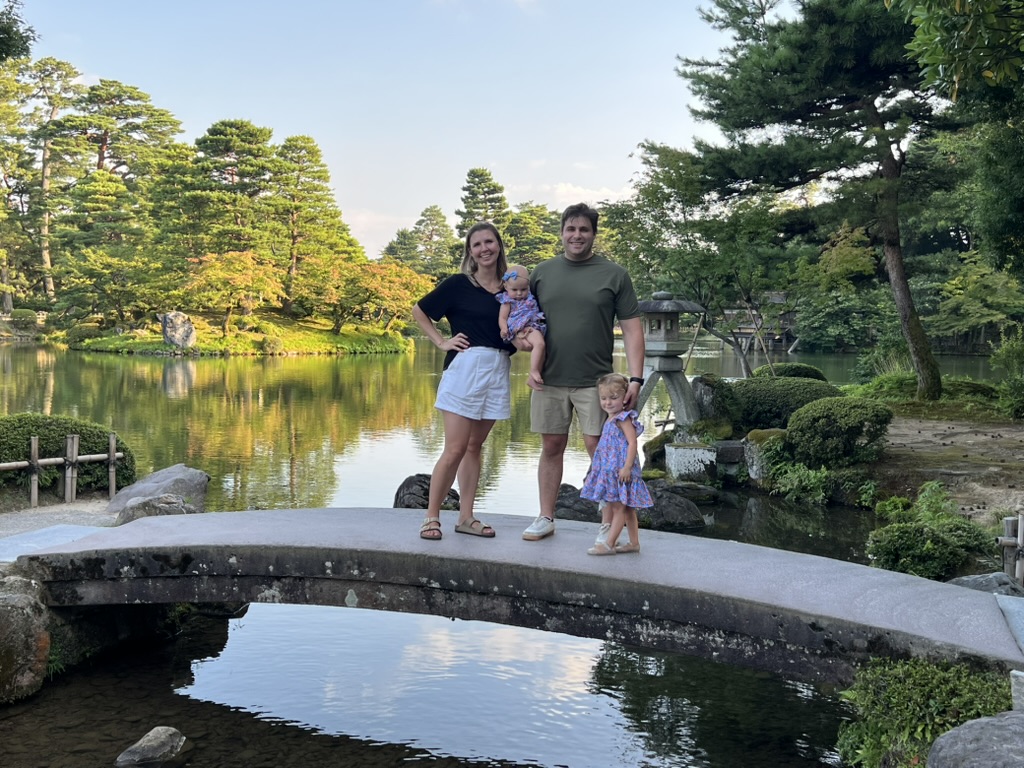
Some trips you can't say no to.
This was one of ours. Two little kids, a long flight, and every practical reason to wait until they were older. We went anyway.
It was a lot to juggle. Naps happened in carriers, snacks did a lot of heavy lifting, and Dylan hauled a little mermaid purse across the whole country like it held her passport. And around all of that, days like this one.
Funny thing looking back: two kids felt like a handful then. We could still pair off, one parent per girl. Now, with four girls in tow, a trip like this one looks downright calm.
Mostly I'm glad we didn't wait for a smoother season. The smoother season is always a couple years out. Say yes, take the trip, and figure the rest out on the way.
 8 reactions
-
Shane Gring
Fractional COO · operations for expert-led businesses
…see more 2 reactions · 1 comment
Here's a test for whether your website has an owner: how long would it take to fix a typo on it today?
If the honest answer is "I'd have to find who has the login, then wait on someone," your site is between owners. It probably has been for a while.
That gap costs more than it looks like. The small fixes that never ship are the ones customers notice. The wrong price. The dead contact form. The page about a service you stopped offering last year. None of it needs a rebuild. It needs a person whose job is the site, on a rhythm, so a fix takes days instead of a committee.
That's a service I run now. You keep the site you have, wherever it lives, and I own the upkeep -- requests by voice note if that's easiest, fixes shipped within days, a site that stays true to the business as it changes.
If the typo test stung a little, details are in the comments.
Two ways to start.
One costs you half an hour. The other costs you two minutes and you do not have to talk to anybody.
Not sure which one? Book the call. Working out which one you need is the first thing we do on it.